
Broken links are one of the most common technical SEO issues that website owners face. Whether you run a business website, an eCommerce store, or a blog, broken links can negatively impact user experience and search engine performance. Many website owners ask, do broken links affect SEO, and the answer is yes. While a few broken links may not cause severe ranking losses, a large number of dead links can create crawling issues, reduce user trust, and weaken the overall health of your website.
Understanding the impact of broken links on SEO is essential for maintaining a high-performing website. Search engines aim to provide users with the best possible experience. When visitors click a link and land on a 404 error page, it creates frustration and may encourage them to leave your website. This can indirectly affect important SEO metrics such as engagement, bounce rate, and crawl efficiency.
In this guide, you will learn how broken links affect search rankings, how to identify broken links on a website, and the best ways to fix them.
What Are Broken Links?
Broken links, also known as dead links, are hyperlinks that no longer lead to the intended webpage. Instead, users may encounter a 404 error page or another type of error message.
A broken link usually occurs when a page is deleted, moved without a proper redirect, the URL structure changes, or the destination website becomes unavailable. These link errors can affect both internal links and external links.
Internal broken links occur when one page on your website links to another page that no longer exists. External broken links occur when your website links to another website that has removed or changed its content.
Do Broken Links Affect SEO?
Yes, broken links affect SEO in several ways. While Google has stated that a few broken links are normal on the web, excessive broken links can create technical SEO problems.
Search engines use links to discover, crawl, and understand website content. When crawlers encounter multiple broken links, it can reduce crawl efficiency and impact website health.
Broken links can also damage user experience. If visitors repeatedly encounter dead links, they may lose trust in your website and leave without exploring additional pages.
How Broken Links Impact Search Rankings
Reduced Crawl Efficiency
Search engine bots have a limited crawl budget. When they spend time crawling broken URLs, fewer resources are available for indexing valuable pages.
This can delay the discovery of new content and reduce overall website crawlability.
Poor User Experience
User experience and SEO are closely connected. Visitors expect links to work correctly. Encountering multiple broken links creates frustration and can increase bounce rates.
A poor experience often results in lower engagement signals, which may indirectly influence rankings.
Loss of Link Equity
Link equity, often referred to as link juice, passes authority between pages. When a page with backlinks becomes broken, valuable authority may be lost.
Broken backlink analysis is important because recovering these links can restore lost SEO value.
Website Credibility Issues
Broken links make a website appear outdated or poorly maintained. Both users and search engines prefer websites that are regularly updated and monitored.
Maintaining healthy links demonstrates professionalism and trustworthiness.
Internal Broken Links vs External Broken Links
Understanding the difference between internal and external broken links helps prioritize fixes.
| Factor | Internal Broken Links | External Broken Links |
|---|---|---|
| Location | Within your website | Links to other websites |
| SEO Impact | High | Moderate |
| Crawlability | Directly affected | Less affected |
| User Experience | Negative | Negative |
| Link Equity Loss | Significant | Limited |
| Fix Difficulty | Easy | Depends on destination site |
| Recommended Action | Redirect or update URL | Replace or remove link |
Both types of links require regular monitoring as part of website maintenance for better SEO.
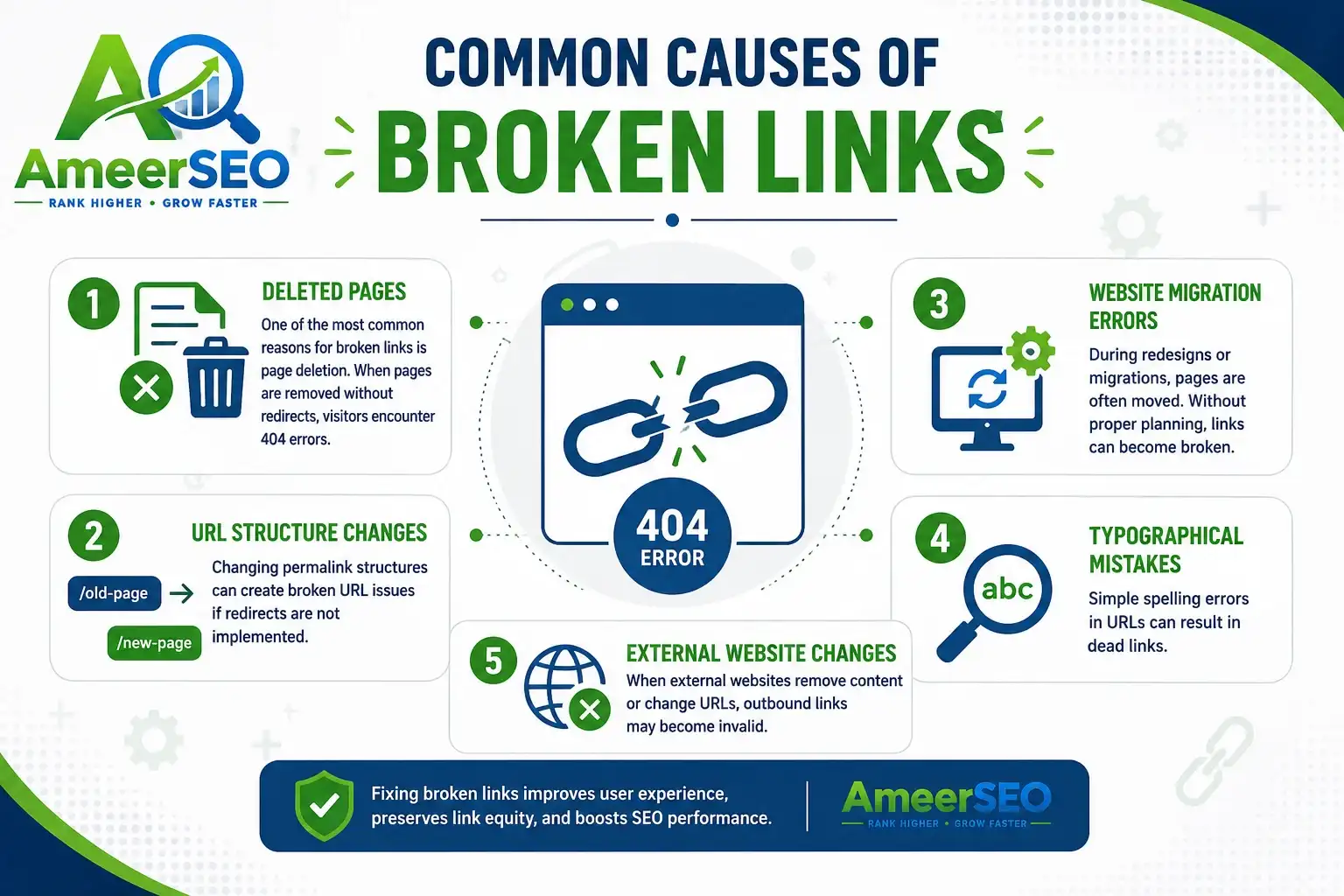
Common Causes of Broken Links
Deleted Pages
One of the most common reasons for broken links is page deletion. When pages are removed without redirects, visitors encounter 404 errors.
URL Structure Changes
Changing permalink structures can create broken URL issues if redirects are not implemented.
Website Migration Errors
During redesigns or migrations, pages are often moved. Without proper planning, links can become broken.
Typographical Mistakes
Simple spelling errors in URLs can result in dead links.
External Website Changes
When external websites remove content or change URLs, outbound links may become invalid.
How 404 Errors Impact SEO
A 404 error occurs when a requested page cannot be found.
Google generally handles occasional 404 errors without issue. However, a large number of 404 errors can create crawling inefficiencies and reduce user satisfaction.
The SEO impact of 404 errors becomes more significant when important pages, high-authority pages, or pages with backlinks are affected.
Monitoring page indexing issues and resolving broken URLs quickly helps maintain website health.
How to Find Broken Links on a Website
Regular technical SEO audits are essential for identifying broken links.
Google Search Console
Google Search Console reports crawl errors and indexing issues. Website owners can use this tool to identify problematic URLs.
SEO Crawling Tools
Popular tools include:
- Screaming Frog
- Ahrefs
- Semrush
- Sitebulb
- Broken Link Checker
These tools can quickly identify internal broken links, external broken links, redirect chains, and crawl errors.
Manual Testing
Manually checking important pages can uncover broken links that automated tools may overlook.
A comprehensive website health check should include both automated and manual analysis.
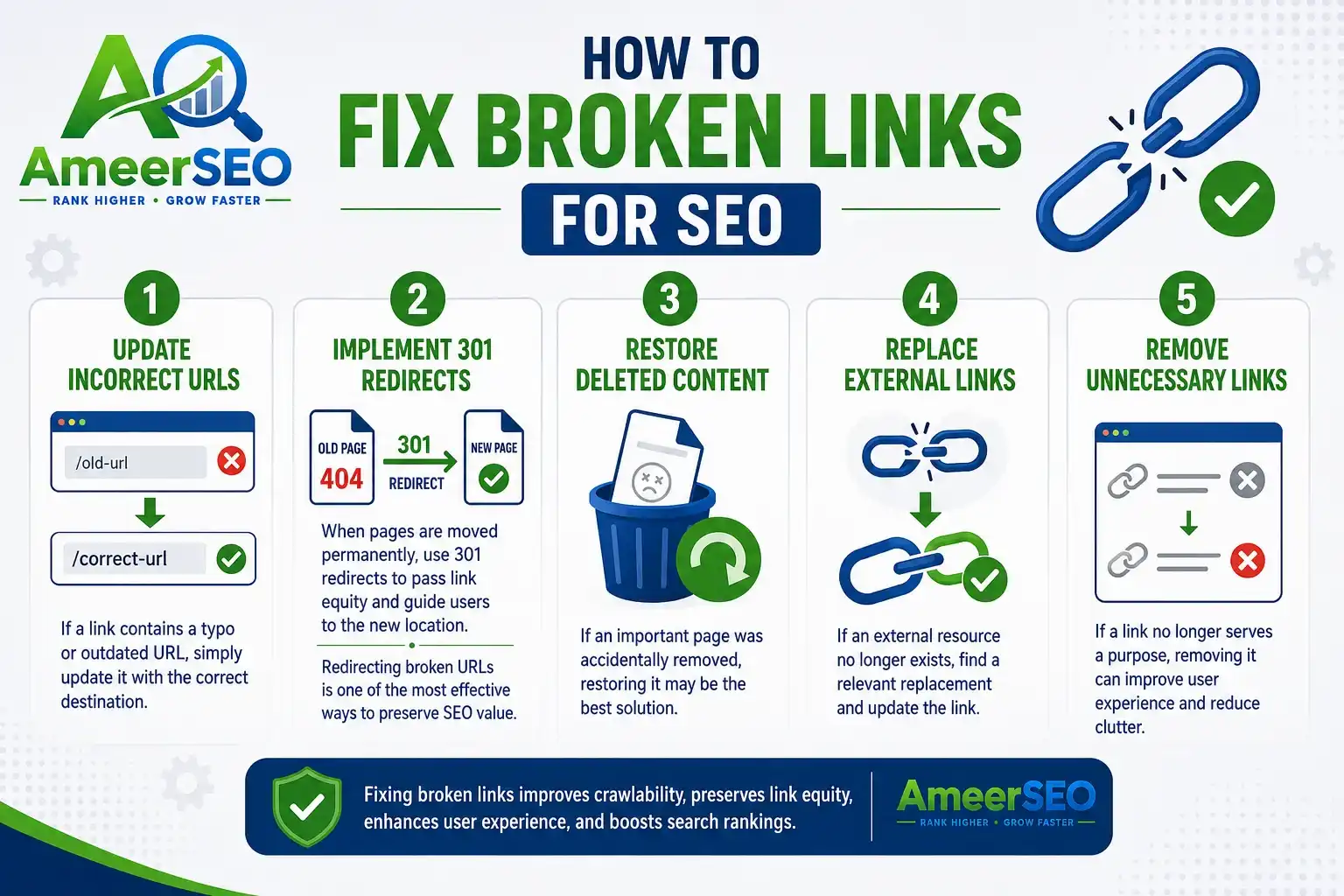
How to Fix Broken Links for SEO
Update Incorrect URLs
If a link contains a typo or outdated URL, simply update it with the correct destination.
Implement 301 Redirects
When pages are moved permanently, use 301 redirects to pass link equity and guide users to the new location.
Redirecting broken URLs is one of the most effective ways to preserve SEO value.
Restore Deleted Content
If an important page was accidentally removed, restoring it may be the best solution.
Replace External Links
If an external resource no longer exists, find a relevant replacement and update the link.
Remove Unnecessary Links
If a link no longer serves a purpose, removing it can improve user experience and reduce clutter.
Broken Backlinks and SEO
Broken backlinks occur when other websites link to pages on your website that no longer exist.
These broken backlinks can lead to lost authority and missed ranking opportunities.
Broken backlink recovery involves identifying these links and redirecting them to relevant pages.
This process helps preserve valuable link equity and improve website authority.
The Role of Technical SEO Audits
A technical SEO audit helps identify:
- Website crawl errors.
- Broken links on websites.
- Page indexing issues.
- Redirect problems.
- Internal linking issues.
- Website navigation optimization opportunities.
Regular audits ensure search engines can efficiently crawl and index your content.
Broken Links and Website Authority
Website authority is influenced by many factors, including content quality, backlinks, and technical SEO.
Broken links can weaken authority by interrupting link equity flow and reducing user trust.
Maintaining healthy links supports website authority improvement and better search engine visibility.
Best Practices for Link Management SEO
Successful link management involves continuous monitoring and maintenance.
Website owners should routinely review internal links, update outdated resources, monitor crawl errors, and perform technical SEO site audits.
Maintaining a strong internal linking strategy ensures users and search engines can easily navigate the website.
A proactive approach helps prevent future link errors and improves long-term SEO performance.
Do Internal Broken Links Hurt SEO More Than External Broken Links?
Internal broken links generally have a greater impact because they directly affect website crawlability, navigation, and link equity distribution.
External broken links still create a poor user experience, but they typically have less influence on crawl budget.
For this reason, fixing internal broken links should be a higher priority during a website broken link audit.
Broken Link Building Strategy
Broken link building is an SEO technique where you identify broken links on other websites and suggest your content as a replacement.
This strategy provides value to website owners while creating opportunities to earn high-quality backlinks.
When executed correctly, broken link building can improve search engine visibility and website authority.
Why Regular Website Maintenance Matters
SEO is not a one-time task. Websites continuously evolve, and link issues can develop over time.
Regular website maintenance helps identify technical issues before they affect rankings.
Monitoring broken links, crawl errors, redirects, and indexing issues ensures long-term SEO success.
Businesses seeking professional assistance often work with an seo expert in Pakistan or an seo expert in Lahore to conduct detailed audits and maintain website performance.
For websites aiming to achieve sustainable growth, technical SEO should always be part of a comprehensive optimization strategy. Professionals such as Ameer SEO emphasize the importance of routine audits, link maintenance, and user experience improvements to support stronger rankings.
Conclusion
So, do broken links affect SEO? Absolutely. While a few broken links are normal, excessive broken links can harm user experience, waste crawl budget, reduce link equity, and negatively affect website performance.
The good news is that broken links are relatively easy to identify and fix. Regular technical SEO audits, proper redirects, link monitoring, and website maintenance can help prevent issues and improve search engine visibility.
By maintaining a healthy website structure and addressing broken links promptly, you can protect rankings, improve user satisfaction, and strengthen your overall SEO strategy.
Frequently Asked Questions (FAQs)
Do broken links affect SEO rankings?
Yes, broken links can affect SEO rankings indirectly by reducing crawl efficiency, harming user experience, and causing loss of link equity.
How do I find broken links on my website?
You can use Google Search Console, Screaming Frog, Ahrefs, Semrush, and other broken link checker tools to identify broken URLs.
Do internal broken links hurt SEO?
Yes, internal broken links can negatively impact crawlability, user navigation, and link equity distribution.
Do external broken links affect SEO?
External broken links primarily affect user experience, but they can also indicate poor website maintenance.
How can I fix broken links for SEO?
You can update URLs, implement 301 redirects, restore deleted pages, replace outdated external links, or remove unnecessary links.
What is a broken backlink?
A broken backlink occurs when another website links to a page on your website that no longer exists.
Does Google penalize websites for broken links?
Google does not usually penalize websites for a small number of broken links, but excessive broken links can create technical SEO issues.
What is broken link building?
Broken link building is a link-building strategy where you replace broken links on other websites with relevant content from your own website.
How often should I check for broken links?
Most websites should perform a broken link audit at least once a month and after major website updates.
Are 404 errors bad for SEO?
Occasional 404 errors are normal, but a large number of unresolved 404 errors can negatively impact user experience and crawl efficiency.