
In today’s competitive digital landscape, businesses and website owners are constantly looking for ways to improve their search engine rankings and attract more organic traffic. One of the most frequently asked questions is: Does blogging help SEO? The answer is yes. Blogging remains one of the most effective methods for improving search engine visibility, building topical authority, and increasing website traffic organically.
A well-planned blogging strategy for SEO allows businesses to target relevant keywords, answer user search intent, and create valuable content that search engines can index and rank. Whether you operate a small business website, an eCommerce store, or a corporate platform, blogging can significantly contribute to your SEO success.
What Is SEO Blogging?
SEO blogging is the process of creating and publishing blog content that is optimized for search engines while providing value to readers. Unlike regular content writing, SEO-friendly blog content focuses on keyword research, user intent, content structure, and optimization techniques that help improve search rankings.
When businesses consistently publish high-quality blog posts, search engines recognize their websites as active and authoritative sources of information. This contributes to higher rankings, increased website traffic, and better user engagement.
Blogging for SEO is not simply about inserting keywords into articles. It involves creating content that answers questions, solves problems, and provides relevant information that users are actively searching for online.
Does Blogging Help SEO?
Yes, blogging helps SEO in several ways. Search engines like Google prioritize websites that consistently create fresh, relevant, and valuable content. A blog provides opportunities to target long-tail keywords, improve website indexation, and attract targeted visitors.
Every blog post acts as an additional page that can rank in search results. As you optimize blog posts around relevant search terms, your chances of appearing in search engine results pages increase significantly.
Blogging also supports content marketing and SEO by providing a platform for businesses to educate their audience, demonstrate expertise, and build trust. Over time, this strengthens online presence and improves website rankings.
How Blogging Improves SEO
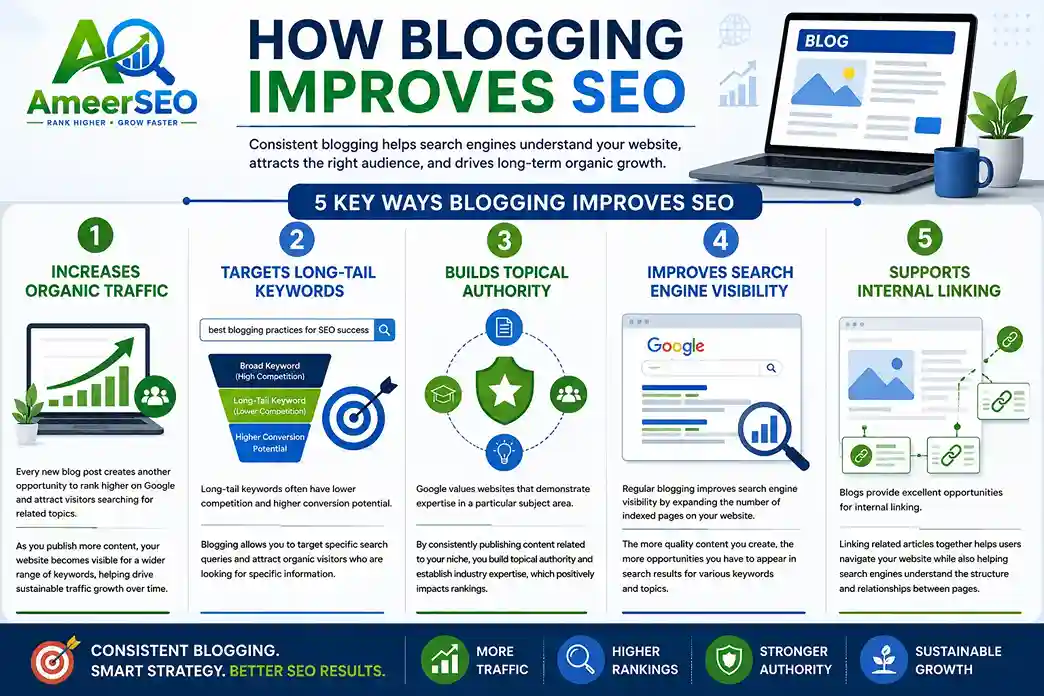
Increases Organic Traffic
One of the primary SEO benefits of blogging is the ability to increase organic website traffic. Every new blog post creates another opportunity to rank higher on Google and attract visitors searching for related topics.
As you publish more content, your website becomes visible for a wider range of keywords, helping drive sustainable traffic growth over time.
Targets Long-Tail Keywords
Long-tail keywords often have lower competition and higher conversion potential. Blogging allows businesses to target specific search queries that users enter into search engines.
For example, instead of targeting a broad keyword like “SEO,” a blog can focus on phrases such as “how blogging improves search engine rankings” or “best blogging practices for SEO success.”
This targeted approach helps attract organic visitors who are looking for specific information.
Builds Topical Authority
Google values websites that demonstrate expertise in a particular subject area. By consistently publishing content related to your niche, you build topical authority and establish industry expertise.
As your library of blog content grows, search engines gain a better understanding of your website’s relevance, which can positively impact rankings.
Improves Search Engine Visibility
Regular blogging improves search engine visibility by expanding the number of indexed pages on your website. Search engines frequently crawl websites that update content regularly.
The more quality content you create, the more opportunities you have to appear in search results for various keywords and topics.
Supports Internal Linking
Blogs provide excellent opportunities for internal linking. Linking related articles together helps users navigate your website while also helping search engines understand the structure and relationships between pages.
A strong internal linking strategy contributes to better indexing and improved SEO performance.
Blogging and Content Marketing Strategy
Content marketing and SEO work together to achieve long-term digital marketing goals. Blogging serves as the foundation of an effective content marketing strategy because it allows businesses to create valuable content that attracts and engages their target audience.
A blog marketing strategy should focus on answering user questions, solving common problems, and providing insights relevant to the industry. This approach not only improves user engagement but also increases the likelihood of earning backlinks naturally.
When users find your content useful, they are more likely to share it, reference it, and link to it from other websites.
Benefits of Blogging for Website SEO
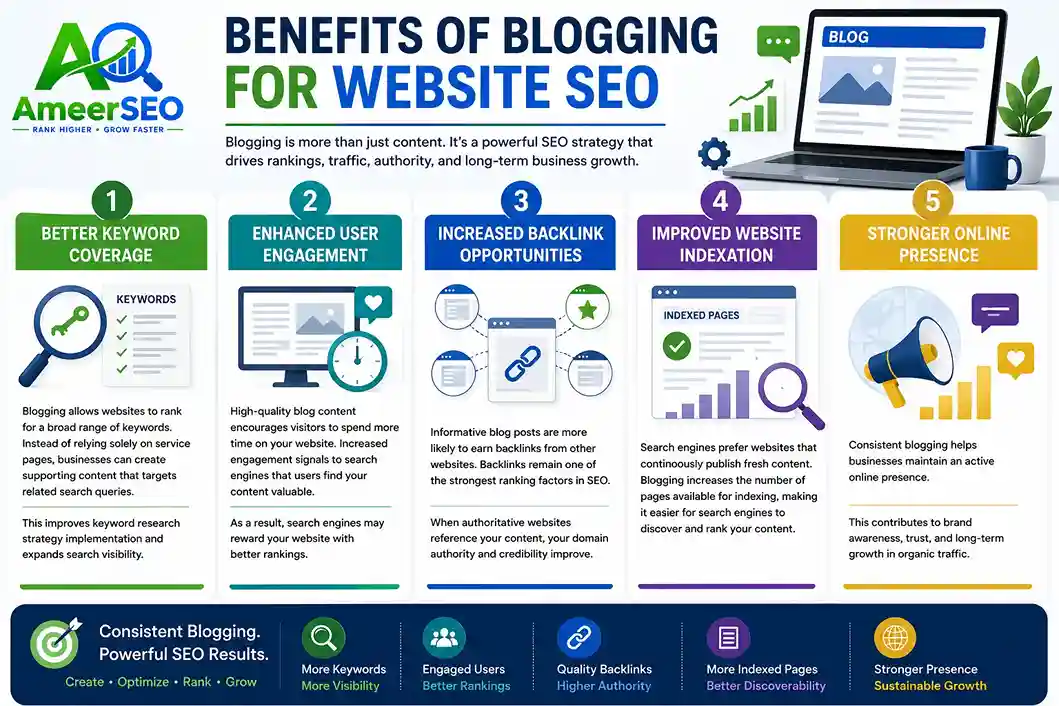
Better Keyword Coverage
Blogging allows websites to rank for a broad range of keywords. Instead of relying solely on service pages, businesses can create supporting content that targets related search queries.
This improves keyword research strategy implementation and expands search visibility.
Enhanced User Engagement
High-quality blog content encourages visitors to spend more time on your website. Increased engagement signals to search engines that users find your content valuable.
As a result, search engines may reward your website with better rankings.
Increased Backlink Opportunities
Informative blog posts are more likely to earn backlinks from other websites. Backlinks remain one of the strongest ranking factors in SEO.
When authoritative websites reference your content, your domain authority and credibility improve.
Improved Website Indexation
Search engines prefer websites that continuously publish fresh content. Blogging increases the number of pages available for indexing, making it easier for search engines to discover and rank your content.
Stronger Online Presence
Consistent blogging helps businesses maintain an active online presence. This contributes to brand awareness, trust, and long-term growth in organic traffic.
Website With Blogging vs Website Without Blogging
| Factor | Website With Blogging | Website Without Blogging |
|---|---|---|
| Organic Traffic | Consistently grows over time | Limited growth opportunities |
| Search Engine Visibility | Higher due to more indexed pages | Lower visibility |
| Keyword Rankings | Ranks for more keywords | Restricted keyword coverage |
| Backlink Opportunities | Greater potential for natural backlinks | Fewer linking opportunities |
| User Engagement | Higher engagement levels | Lower engagement |
| Topical Authority | Strong authority development | Limited authority |
| Content Freshness | Regular updates signal relevance | Static content |
| Lead Generation | More opportunities to attract leads | Fewer opportunities |
Best Blogging Practices for SEO
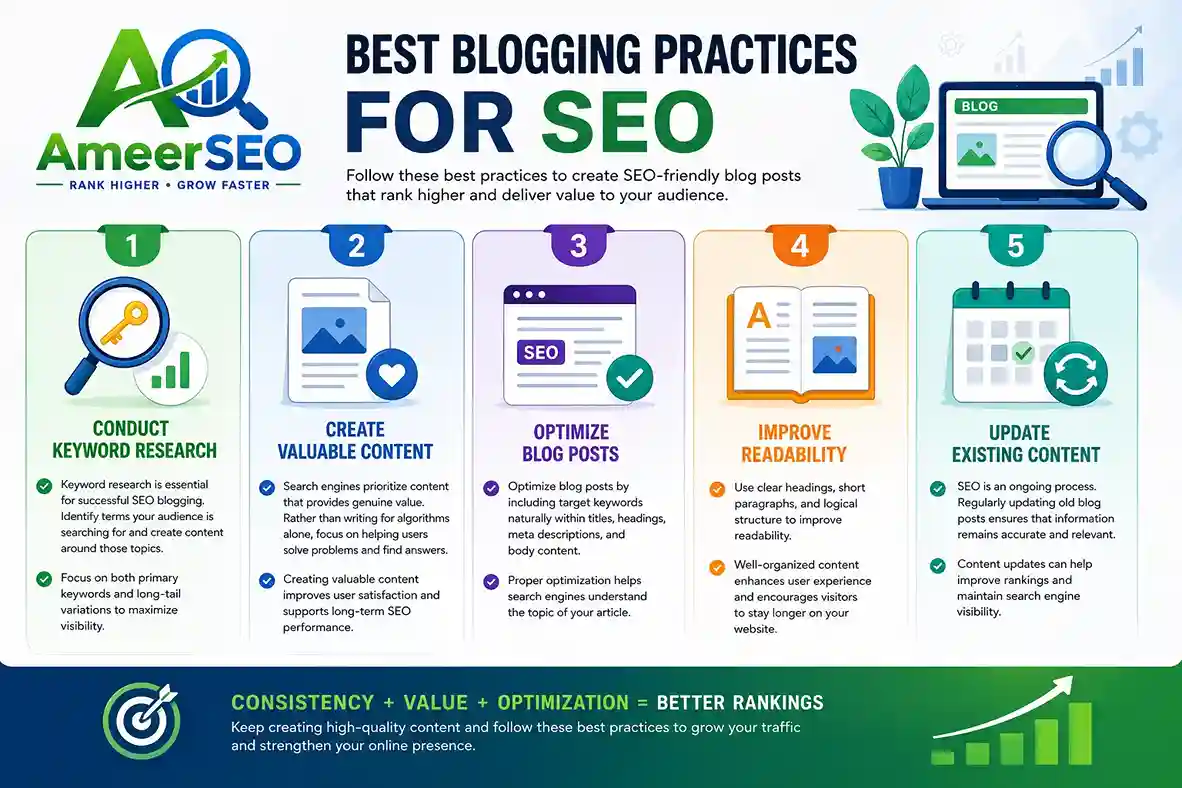
Conduct Keyword Research
Keyword research is essential for successful SEO blogging. Identify terms your audience is searching for and create content around those topics.
Focus on both primary keywords and long-tail variations to maximize visibility.
Create Valuable Content
Search engines prioritize content that provides genuine value. Rather than writing for algorithms alone, focus on helping users solve problems and find answers.
Creating valuable content improves user satisfaction and supports long-term SEO performance.
Optimize Blog Posts
Optimize blog posts by including target keywords naturally within titles, headings, meta descriptions, and body content.
Proper optimization helps search engines understand the topic of your article.
Improve Readability
Use clear headings, short paragraphs, and logical structure to improve readability.
Well-organized content enhances user experience and encourages visitors to stay longer on your website.
Update Existing Content
SEO is an ongoing process. Regularly updating old blog posts ensures that information remains accurate and relevant.
Content updates can help improve rankings and maintain search engine visibility.
How Often Should You Blog for SEO?
There is no universal publishing schedule that works for every website. However, consistency is more important than frequency.
Some businesses achieve excellent results by publishing one high-quality article per week, while others may publish multiple articles each week.
The key is maintaining quality and ensuring that each piece of content contributes value to your audience.
Publishing regularly signals to search engines that your website is active and committed to providing useful information.
Common Blogging Mistakes That Hurt SEO
Many websites fail to achieve SEO success because they make common blogging mistakes.
Publishing thin content with little value can negatively impact rankings. Search engines prefer comprehensive content that thoroughly addresses user intent.
Keyword stuffing is another issue. Repeating keywords excessively makes content difficult to read and may lead to ranking penalties.
Ignoring internal linking opportunities can also limit SEO performance. Strategic linking helps search engines understand your website structure.
Many website owners neglect content updates, allowing outdated information to remain online. Keeping content fresh improves relevance and user trust.
Does Blogging Help Local SEO?
Blogging can significantly improve local SEO efforts. Businesses can create location-specific content targeting local search queries and customer needs.
For example, a business can publish articles about local events, industry trends, customer success stories, or regional services.
Local blogging helps businesses appear in geographically relevant search results and attract nearby customers.
Many businesses working with an seo company in Pakistan use blogging as a key component of their local SEO strategy because it increases visibility and supports long-term growth.
Blogging and Lead Generation
Beyond improving rankings, blogging helps generate qualified leads. Informative content attracts users at different stages of the buyer journey.
Potential customers often begin with informational searches before making purchasing decisions. By providing useful content, businesses can establish trust and nurture prospects toward conversion.
Companies that invest in SEO content strategy frequently experience higher lead generation rates compared to businesses that rely solely on promotional pages.
An experienced seo agency in Lahore often incorporates blogging into comprehensive SEO campaigns because of its ability to attract targeted visitors and support business growth.
Is Blogging Still Effective for SEO in 2026?
Despite changes in search engine algorithms, blogging remains highly effective. Search engines continue to prioritize relevant, helpful, and authoritative content.
Businesses that consistently publish quality blog posts are better positioned to rank for competitive keywords, attract organic traffic, and establish industry expertise.
Modern SEO blogging focuses on user intent, content depth, and topical authority rather than simply targeting individual keywords.
As search engines become more sophisticated, high-quality content becomes even more important.
Brands such as Ameer SEO recognize the value of strategic blogging as part of a broader digital marketing approach that supports long-term search visibility.
Conclusion
So, does blogging help SEO? Absolutely. Blogging remains one of the most powerful tools for improving search engine rankings, increasing organic traffic, building topical authority, and enhancing user engagement.
A successful blogging strategy combines keyword research, valuable content creation, optimization techniques, and consistent publishing. When implemented correctly, blogging can help businesses attract targeted visitors, strengthen online presence, and generate sustainable growth.
Whether your goal is to improve website rankings, earn backlinks naturally, increase website traffic organically, or establish industry expertise, blogging continues to be a proven and effective SEO strategy.
Frequently Asked Questions (FAQs)
Does blogging help with SEO?
Yes. Blogging helps SEO by increasing search engine visibility, targeting long-tail keywords, building topical authority, and attracting organic traffic.
How blogging improves SEO rankings?
Blogging improves rankings by creating valuable content, optimizing for relevant keywords, increasing indexed pages, and improving user engagement.
How often should you blog for SEO?
Consistency matters more than frequency. Publishing one high-quality article weekly is often sufficient for many businesses.
Does blogging increase organic traffic?
Yes. Each blog post creates an opportunity to rank for new keywords and attract additional visitors from search engines.
Can blogs help rank on Google?
Yes. Well-optimized blog posts that satisfy user intent can rank highly in Google search results and drive qualified traffic.
Why are blogs important for SEO?
Blogs provide fresh content, support keyword targeting, improve website indexation, and help establish topical authority.
Does blogging help local SEO?
Yes. Localized blog content can improve visibility in local search results and attract customers from specific geographic areas.
What are the best blogging practices for SEO?
Best practices include keyword research, creating valuable content, optimizing blog posts, improving readability, updating old content, and using internal links effectively.
Is blogging still effective for SEO?
Yes. Blogging remains one of the most effective SEO strategies because search engines continue to prioritize useful and authoritative content.
How long does it take for blogging to improve SEO?
Results vary depending on competition, content quality, and website authority. Many websites begin seeing improvements within three to six months of consistent blogging.