
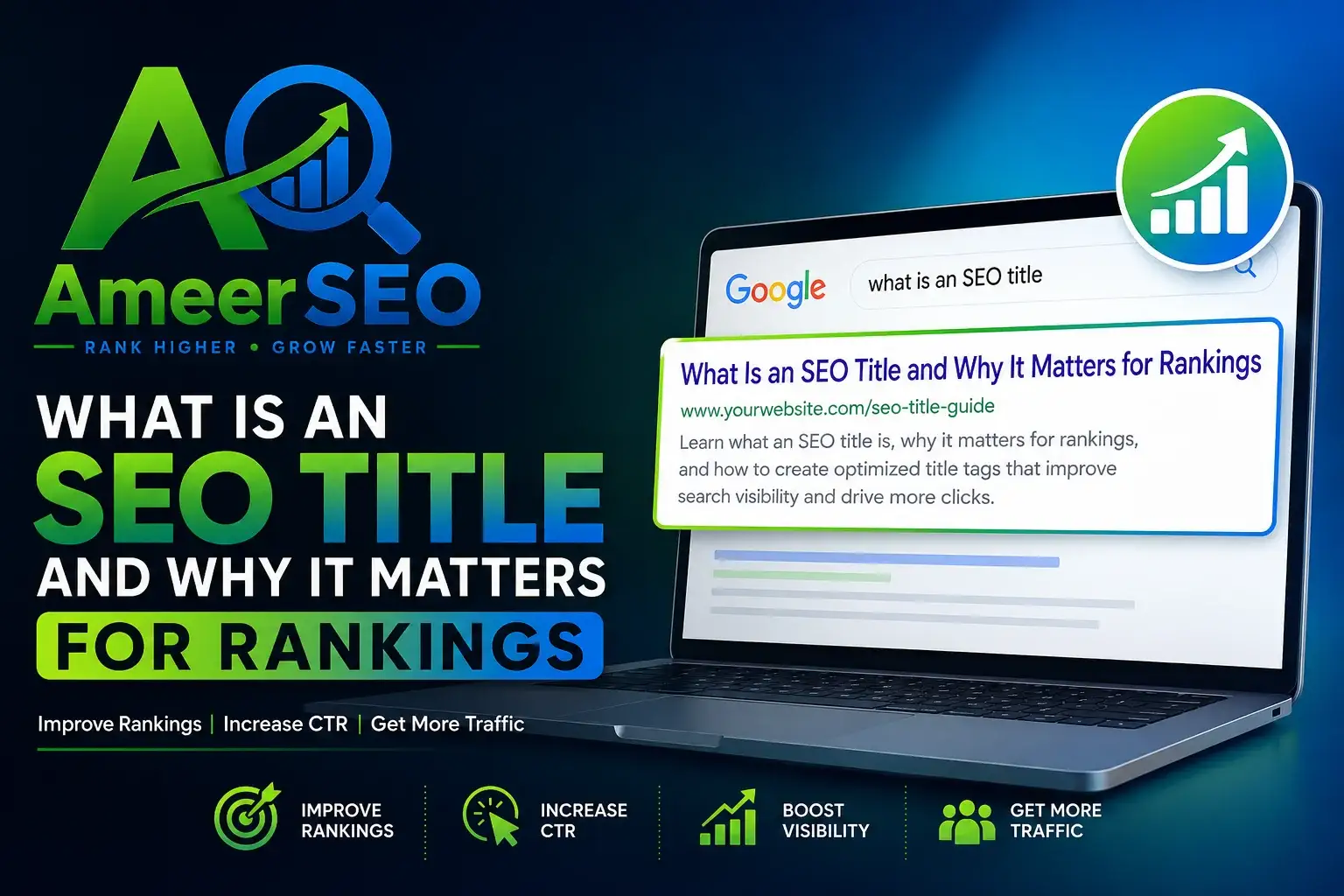
An SEO title is one of the most important elements of on-page SEO. It serves as the title tag that search engines display in search results and browser tabs. When users search for information online, the SEO title is often the first thing they see before deciding whether to click on a webpage.
Understanding what an SEO title is and why it matters for rankings can help website owners improve their search visibility, attract more organic traffic, and increase click-through rates. A well-optimized SEO title helps search engines understand the topic of a page while encouraging users to visit the content.
In today’s competitive digital landscape, creating effective SEO page titles is a fundamental part of every successful SEO strategy.
What Is an SEO Title?
An SEO title, also known as a title tag or page title, is an HTML element that specifies the title of a webpage. Search engines use this title to understand the page’s content and display it in search engine results pages (SERPs).
The title tag appears as the clickable headline in Google search results. It also appears in browser tabs and is commonly used when pages are shared on social media platforms.
The SEO title provides both search engines and users with a quick summary of what the page is about. This makes it one of the most influential pieces of SEO metadata optimization.
Understanding the Difference Between an SEO Title and an H1 Heading
Many people confuse an SEO title with an H1 heading. While they are related, they serve different purposes.
The SEO title is primarily designed for search engines and search result displays. It appears in SERPs and browser tabs.
The H1 heading is displayed on the webpage itself and serves as the main headline for visitors reading the content.
Although the SEO title and H1 can be similar, they do not need to be identical. In many cases, marketers optimize title tags separately to maximize rankings and click-through rates.
Why SEO Titles Matter for Rankings
SEO titles play a significant role in helping search engines understand the relevance of a webpage. When a title includes targeted keywords and accurately describes the content, it sends strong relevance signals to search engines.
Google analyzes title tags to determine whether a page matches user search intent. Pages with relevant and optimized titles often perform better in search engine rankings.
A strong title tag optimization strategy can improve visibility in search results and increase the chances of attracting qualified visitors.
SEO titles also contribute to overall website optimization by making content easier for search engines to crawl and index.
How SEO Titles Affect Search Engine Rankings
Search engines use hundreds of ranking factors, and title tags remain an important part of the ranking process.
When a page title contains the primary keyword naturally, it helps search engines understand the page topic. For example, if someone searches for “what is an SEO title,” a page with that phrase in its title tag has a better chance of appearing in relevant search results.
Keyword-rich titles improve content relevance signals and help search engines categorize webpages correctly.
However, stuffing keywords into title tags can negatively impact user experience and may reduce effectiveness. The goal is to maintain a balance between optimization and readability.
The Relationship Between SEO Titles and Click-Through Rates
While rankings are important, attracting clicks is equally valuable. An SEO title directly influences click-through rate (CTR).
Users often compare multiple search results before deciding which page to visit. A compelling title can make a listing stand out from competitors.
Titles that clearly communicate value, answer user questions, or create curiosity tend to receive higher click-through rates.
Higher CTR can lead to increased organic traffic and improved overall search performance.
Key Components of an Effective SEO Title
Creating SEO-friendly titles requires careful planning. The most effective titles share several characteristics.
They include the target keyword naturally near the beginning of the title whenever possible.
They accurately reflect the content on the page.
They remain concise and easy to understand.
They encourage users to click without using misleading language.
They align with user search intent and provide a clear expectation of the page content.
When these elements work together, the result is a powerful SEO title that benefits both users and search engines.
Ideal SEO Title Length
One of the most common questions is about SEO title length recommendations.
Google typically displays around 50 to 60 characters of a title tag before truncating it. While there is no strict character limit, keeping titles within this range helps ensure the full message appears in search results.
Short titles may not provide enough context, while overly long titles risk being cut off.
The ideal approach is to create concise titles that include the primary keyword while delivering a compelling message.
How to Write an SEO Title for Better Rankings
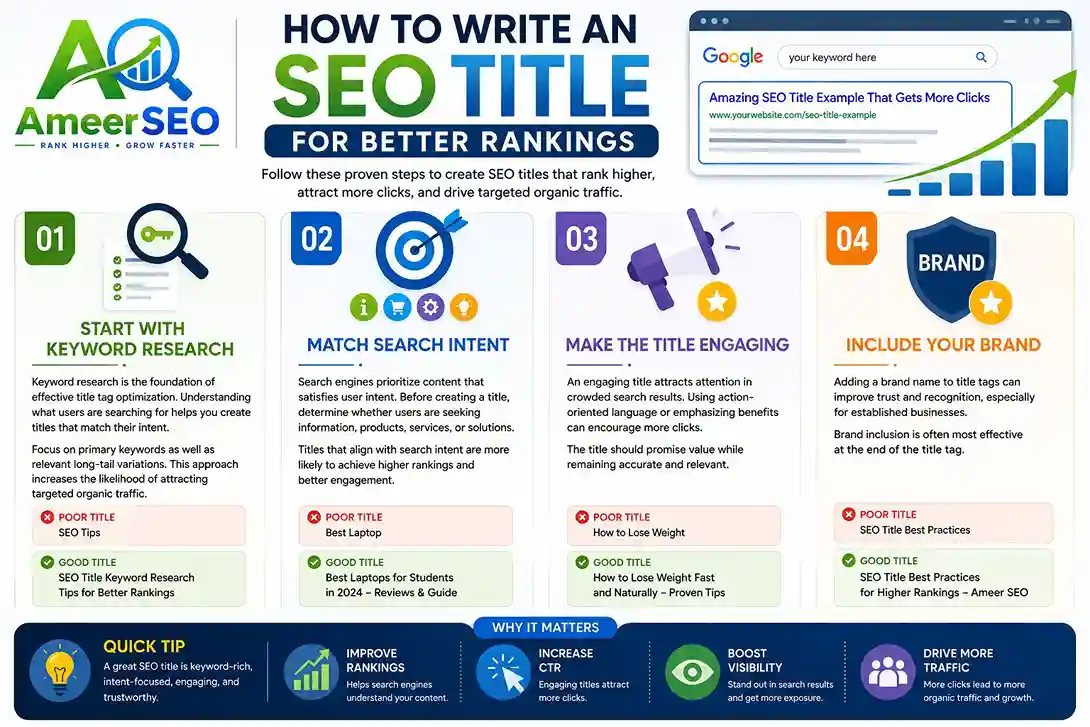
Start With Keyword Research
Keyword research is the foundation of effective title tag optimization. Understanding what users are searching for helps you create titles that match their intent.
Focus on primary keywords as well as relevant long-tail variations. This approach increases the likelihood of attracting targeted organic traffic.
Match Search Intent
Search engines prioritize content that satisfies user intent. Before creating a title, determine whether users are seeking information, products, services, or solutions.
Titles that align with search intent are more likely to achieve higher rankings and better engagement.
Make the Title Engaging
An engaging title attracts attention in crowded search results. Using action-oriented language or emphasizing benefits can encourage more clicks.
The title should promise value while remaining accurate and relevant.
Include Your Brand
Adding a brand name to title tags can improve trust and recognition, especially for established businesses.
Brand inclusion is often most effective at the end of the title tag.
Common SEO Title Mistakes to Avoid
Many website owners unknowingly make mistakes that reduce title effectiveness.
One common issue is keyword stuffing. Repeating keywords excessively can make titles appear unnatural and spammy.
Another mistake is using generic titles that fail to communicate value.
Duplicate title tags across multiple pages can also create confusion for search engines and reduce ranking potential.
Some websites use misleading titles that do not match page content. This can increase bounce rates and harm user trust.
Avoiding these mistakes helps create stronger title tags and better search performance.
SEO Title Examples
Here are examples of optimized title tags.
A poorly optimized title might simply say “SEO Guide.”
A better version would be “What Is an SEO Title? Complete Guide to Better Rankings.”
The second example clearly communicates the topic, includes the target keyword, and provides value to users.
Another example could be “SEO Title Best Practices: How to Improve Search Visibility.”
These titles help search engines understand page content while encouraging clicks.
SEO Titles and Organic Traffic
The connection between SEO titles and organic traffic is significant.
When search engines understand your page and users find the title appealing, rankings and click-through rates can improve simultaneously.
Better rankings increase visibility, while compelling titles attract more clicks.
This combination creates a positive impact on organic search performance and long-term traffic growth.
Businesses investing in on page seo services Pakistan often focus heavily on title tag optimization because it delivers measurable improvements.
SEO Titles and Local Search Optimization
Local businesses can benefit greatly from optimized title tags.
Including location-based keywords within title tags helps search engines understand geographic relevance.
For example, a company offering local seo services in Lahore may include the location naturally within page titles to attract nearby customers.
Localized title tags can improve visibility in regional searches and help businesses reach qualified audiences.
SEO Titles as Part of a Complete SEO Strategy
SEO titles are important, but they work best when integrated into a comprehensive SEO strategy.
Other elements such as content quality, internal linking, site speed, mobile usability, and user experience also contribute to rankings.
The title tag serves as the first signal that introduces search engines and users to your content.
When combined with strong SEO practices, optimized titles can produce significant improvements in visibility and traffic.
Many businesses work with an experienced seo specialist in Pakistan to develop a complete optimization strategy that includes title tags, content optimization, and technical SEO improvements.
Comparison Table: Good SEO Titles vs Poor SEO Titles
| Factor | Good SEO Title | Poor SEO Title |
|---|---|---|
| Keyword Usage | Includes target keyword naturally | Overuses keywords unnaturally |
| Length | 50–60 characters | Too short or excessively long |
| User Intent | Matches search intent | Does not address user needs |
| Click-Through Rate | Encourages clicks | Fails to attract attention |
| Relevance | Accurately reflects content | Misleading or vague |
| Search Visibility | Supports rankings | Weak optimization signals |
| User Experience | Clear and engaging | Confusing or generic |
| Brand Value | Can include branding strategically | No branding consideration |
Future Trends in SEO Title Optimization
Search engines continue evolving, but title tags remain a core ranking signal.
Google increasingly focuses on user intent and content relevance. This means title tags should be written primarily for users while still incorporating important keywords.
AI-driven search technologies are becoming more sophisticated at understanding context, making natural language optimization even more important.
Businesses that consistently create relevant and user-focused titles will remain competitive in search results.
Companies such as Ameer SEO recognize the importance of balancing keyword optimization with user engagement when creating title tags for clients.
Conclusion
Understanding what an SEO title is and why it matters for rankings is essential for anyone involved in digital marketing or website management. Title tags help search engines understand page content, improve search visibility, and increase click-through rates.
A well-crafted SEO title combines keyword relevance, user intent, readability, and engagement. When optimized correctly, title tags can significantly contribute to higher rankings and greater organic traffic.
Whether you are managing a personal blog, business website, or e-commerce store, investing time in title tag optimization is one of the most effective ways to strengthen your SEO performance and achieve long-term growth.
Frequently Asked Questions
What is an SEO title?
An SEO title is an HTML title tag that defines the title of a webpage. It appears in search engine results, browser tabs, and social shares.
Why are SEO titles important?
SEO titles help search engines understand page content and influence both rankings and click-through rates.
How long should an SEO title be?
Most SEO experts recommend keeping title tags between 50 and 60 characters to avoid truncation in search results.
Do title tags affect rankings?
Yes. Title tags are an important on-page SEO factor that helps search engines determine content relevance.
What is the difference between an SEO title and an meta title?
The terms SEO title and meta title are commonly used interchangeably. Both generally refer to the HTML title tag displayed in search results.
Can I use keywords in every SEO title?
Yes, but keywords should be used naturally. Avoid keyword stuffing and focus on creating readable titles.
How often should I update SEO titles?
SEO titles should be reviewed periodically, especially if rankings decline, search trends change, or content is updated.
What makes a good SEO title?
A good SEO title includes the target keyword, matches user intent, remains concise, and encourages users to click.
Can duplicate title tags hurt SEO?
Duplicate title tags can create confusion for search engines and reduce optimization effectiveness. Each page should have a unique title.
Are SEO titles still important in modern SEO?
Yes. Despite advances in search algorithms, title tags remain one of the most important elements of on-page SEO and continue to influence rankings and user engagement.