
Building high-quality backlinks remains one of the most powerful ways to improve your website’s search engine visibility. While Google’s algorithms have become far more sophisticated over the years, backlinks continue to act as trust signals that help search engines determine whether your content deserves higher rankings. The difference today is that quality matters far more than quantity.
Businesses that invest in ethical link building often experience stronger organic traffic, better keyword rankings, and increased brand authority. Whether you manage a small business website, an eCommerce store, or a large corporate platform, earning backlinks from trusted and relevant websites strengthens your online presence for the long term. If you’re looking for a powerful SEO service in Pakistan, understanding how backlinks work is an essential first step toward sustainable growth.
Professional agencies understand that successful link building requires strategy rather than shortcuts. Whether you need an expert SEO service in Karachi for a local business or a high-impact SEO service in Islamabad for a national campaign, focusing on authoritative backlinks delivers more lasting results than outdated spam tactics.
At Ameer SEO, we believe that quality content, strategic outreach, and ethical SEO practices are the foundation of every successful backlink campaign. Instead of chasing thousands of low-quality links, the goal should always be earning links that improve authority, credibility, and organic search performance.
In this comprehensive guide, you’ll learn what high-quality backlinks are, why they matter, proven white hat link building strategies, common mistakes to avoid, useful tools, and practical techniques that can help improve your backlink profile naturally.
What Are High-Quality Backlinks?
A backlink is simply a hyperlink from another website pointing to your website. Search engines treat these links as recommendations. When authoritative websites link to your pages, Google interprets those links as signals that your content provides value.
However, not every backlink carries the same weight. A backlink from a respected industry publication is significantly more valuable than hundreds of links from low-quality directories or spam websites.
High-quality backlinks usually have several characteristics. They come from trusted websites, relate to your industry, appear naturally within valuable content, and provide genuine value to readers. These links help improve website authority while also generating referral traffic from interested audiences.
Why Backlinks Matter for SEO
Search engines evaluate hundreds of ranking signals, but backlinks remain among the strongest indicators of trust and authority.
Quality backlinks help search engines discover new pages more quickly. They also increase website credibility, improve keyword rankings, strengthen domain authority, and contribute to higher organic search traffic.
When reputable websites recommend your content, visitors are more likely to trust your brand. This trust often translates into better engagement, increased conversions, and long-term business growth.
Rather than viewing backlinks as isolated ranking factors, they should be considered part of a broader digital marketing strategy that includes content marketing, technical SEO, user experience, and website optimization.
High-Quality vs Low-Quality Backlinks
| Feature | High-Quality Backlinks | Low-Quality Backlinks |
|---|---|---|
| Website Authority | High | Very Low |
| Industry Relevance | Relevant | Irrelevant |
| Traffic Potential | High | Minimal |
| Editorial Placement | Natural | Artificial |
| SEO Value | Strong | Weak or Harmful |
| Google Compliance | White Hat | Often Violates Guidelines |
| Long-Term Impact | Positive | Risk of Penalties |
Characteristics of Authoritative Backlinks
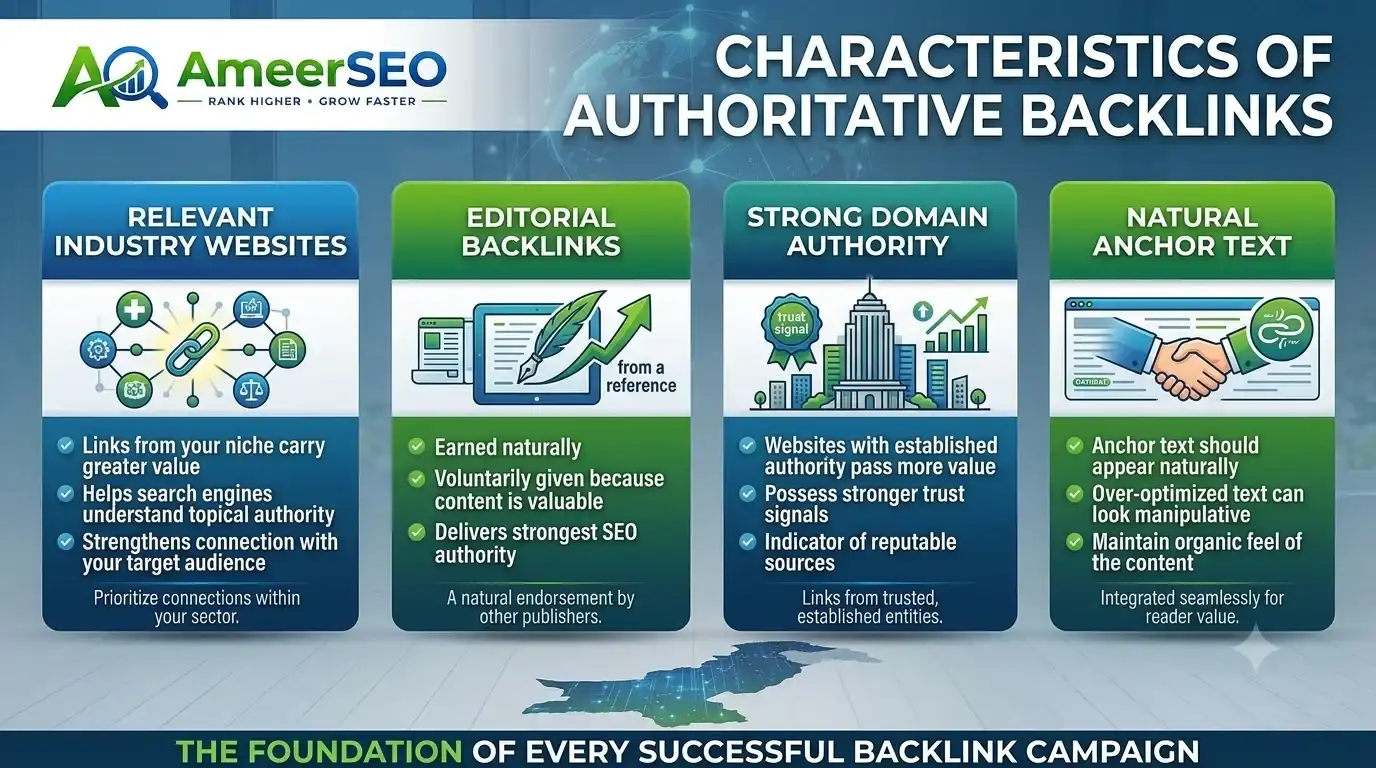
Relevant Industry Websites
Links from websites within your niche carry much greater value than unrelated websites. Relevance helps search engines understand topical authority and strengthens the connection between your website and your target audience.
Editorial Backlinks
Editorial backlinks are earned naturally because another publisher considers your content valuable enough to reference. These links often deliver the strongest SEO authority since they are given voluntarily.
Strong Domain Authority
Websites with established authority typically pass more value than brand-new websites. While domain authority itself is not a Google ranking factor, authoritative websites generally have stronger trust signals.
Natural Anchor Text
Anchor text should appear naturally within content. Over-optimized anchor text can look manipulative and may reduce the effectiveness of your link building strategy.
White Hat Link Building Strategies
White hat link building focuses on earning links naturally while following Google’s Webmaster Guidelines.

Create Exceptional Content
Outstanding content naturally attracts backlinks. Comprehensive guides, original research, industry reports, statistics, case studies, and tutorials often receive more editorial links because they provide lasting value.
When your content answers questions better than competing resources, publishers are more likely to reference it in their own articles.
Guest Blogging
Guest posting remains an effective strategy when done correctly. Instead of publishing on low-quality websites, contribute useful articles to respected publications within your industry.
Focus on sharing expertise rather than simply acquiring backlinks. Quality guest blogging builds authority while expanding your audience.
Broken Link Building
Broken link building involves finding dead links on authoritative websites and suggesting your relevant content as a replacement.
Website owners appreciate being informed about broken links, making this strategy beneficial for both parties.
Digital PR
Digital PR combines public relations with SEO.
Publishing unique research, surveys, expert insights, or industry trends encourages journalists and bloggers to reference your content, generating natural editorial backlinks from trusted publications.
Resource Pages
Many websites maintain resource pages that recommend useful tools, guides, and educational materials.
If your content genuinely provides value, requesting inclusion on these pages can result in high-authority backlinks.
Content Marketing and Link Earning
Content marketing plays an essential role in organic link acquisition.
Publishing valuable articles, original research, industry statistics, infographics, videos, and interactive tools encourages others to reference your content naturally.
Instead of creating content solely for search engines, focus on solving real problems for readers. Valuable content becomes a linkable asset that continues attracting backlinks for years.
Evergreen guides often outperform short-lived content because they remain useful long after publication.
The Role of Link Outreach
Even outstanding content sometimes needs promotion.
Personalized outreach helps introduce your content to bloggers, journalists, website owners, and industry experts who may find it valuable.
Successful outreach emails are brief, relevant, and personalized. Rather than asking directly for backlinks, explain why your content benefits their audience.
Relationship building consistently outperforms mass email campaigns.
Internal Linking Supports Backlink Success
Although internal links are different from backlinks, they distribute link equity throughout your website.
A strong internal linking structure helps search engines understand page relationships while passing authority from linked pages to important service pages.
Combining internal linking with external backlinks creates a stronger SEO foundation.
Backlink Analysis and Monitoring
Monitoring backlinks helps identify opportunities while protecting your website from harmful links.
Useful SEO tools include Google Search Console, Ahrefs, Semrush, Moz, and Majestic.
Regular backlink analysis helps you:
Discover new backlinks
Identify toxic links
Monitor competitor backlink strategies
Find lost backlinks
Measure outreach success
Consistent monitoring ensures your backlink profile remains healthy over time.
Common Link Building Mistakes
Many websites struggle because they prioritize quantity instead of quality.
Buying backlinks from link farms often produces short-term improvements but creates long-term risks. Google’s spam detection systems have become increasingly effective at identifying manipulative link schemes.
Using identical anchor text repeatedly can also appear unnatural. A healthy backlink profile contains branded anchors, generic anchors, partial-match anchors, and natural language variations.
Publishing weak content while expecting authoritative backlinks rarely succeeds. Quality content remains the foundation of every successful backlink campaign.
Ignoring backlink relevance is another common mistake. Links from unrelated websites usually provide far less value than links from industry-specific publications.
How Long Does Link Building Take?
Backlink building is a long-term investment rather than an overnight solution.
Most websites begin seeing measurable improvements within several months, although competitive industries often require longer campaigns.
The exact timeline depends on website authority, competition, content quality, outreach efforts, and overall SEO performance.
Consistent white hat strategies generally produce more stable rankings than aggressive short-term tactics.
Best Practices for Sustainable Link Building
Focus on producing content that deserves backlinks rather than trying to manipulate search engines.
Build relationships within your industry instead of chasing quick wins.
Promote your best content through social media, newsletters, communities, and outreach campaigns.
Monitor backlinks regularly to identify new opportunities and potential risks.
Maintain a diverse backlink profile from blogs, news websites, educational resources, business directories, and authoritative publications.
The Future of Backlinks
Artificial intelligence continues transforming search, but backlinks remain essential because they represent independent endorsements from other websites.
As Google’s algorithms become more sophisticated, link relevance, editorial quality, user engagement, and topical authority will become even more important.
Businesses that prioritize trust, expertise, helpful content, and ethical SEO practices will continue earning valuable backlinks naturally.
Conclusion
High-quality backlinks remain one of the strongest ranking signals in modern SEO. Instead of focusing on large numbers of low-value links, businesses should prioritize authoritative, relevant, and editorial backlinks that improve website credibility.
Combining exceptional content, strategic outreach, digital PR, guest blogging, broken link building, and backlink monitoring creates a sustainable SEO strategy capable of generating long-term organic traffic.
Remember that successful link building is built on trust. When your content genuinely helps people solve problems, authoritative websites become far more willing to reference and recommend it. Over time, these natural endorsements strengthen your backlink profile, improve search visibility, and establish your website as a trusted source within your industry.
Frequently Asked Questions (FAQs)
What is a high-quality backlink?
A high-quality backlink comes from a trusted, authoritative, and relevant website. It appears naturally within valuable content and helps improve your website’s credibility and search engine rankings.
How many backlinks do I need to rank?
There is no fixed number. A few authoritative backlinks from relevant websites are often more valuable than hundreds of low-quality links.
Are backlinks still important for SEO in 2026?
Yes. Despite advances in AI and search algorithms, backlinks remain one of Google’s strongest ranking signals because they indicate trust and authority.
Is buying backlinks safe?
Buying backlinks that violate Google’s guidelines can lead to ranking losses or manual penalties. Ethical white hat link building is the safer and more sustainable approach.
How long does it take to build quality backlinks?
Most campaigns begin showing meaningful results within three to six months, depending on competition, website authority, and content quality.
Which backlink strategy works best?
Creating exceptional content combined with guest blogging, digital PR, broken link building, and personalized outreach consistently delivers the best long-term results.
Which tools help analyze backlinks?
Google Search Console, Ahrefs, Semrush, Moz, and Majestic are among the most widely used tools for backlink monitoring and competitor analysis.
Can backlinks increase website traffic?
Yes. High-quality backlinks not only improve search rankings but also generate referral traffic from users who click links on authoritative websites.