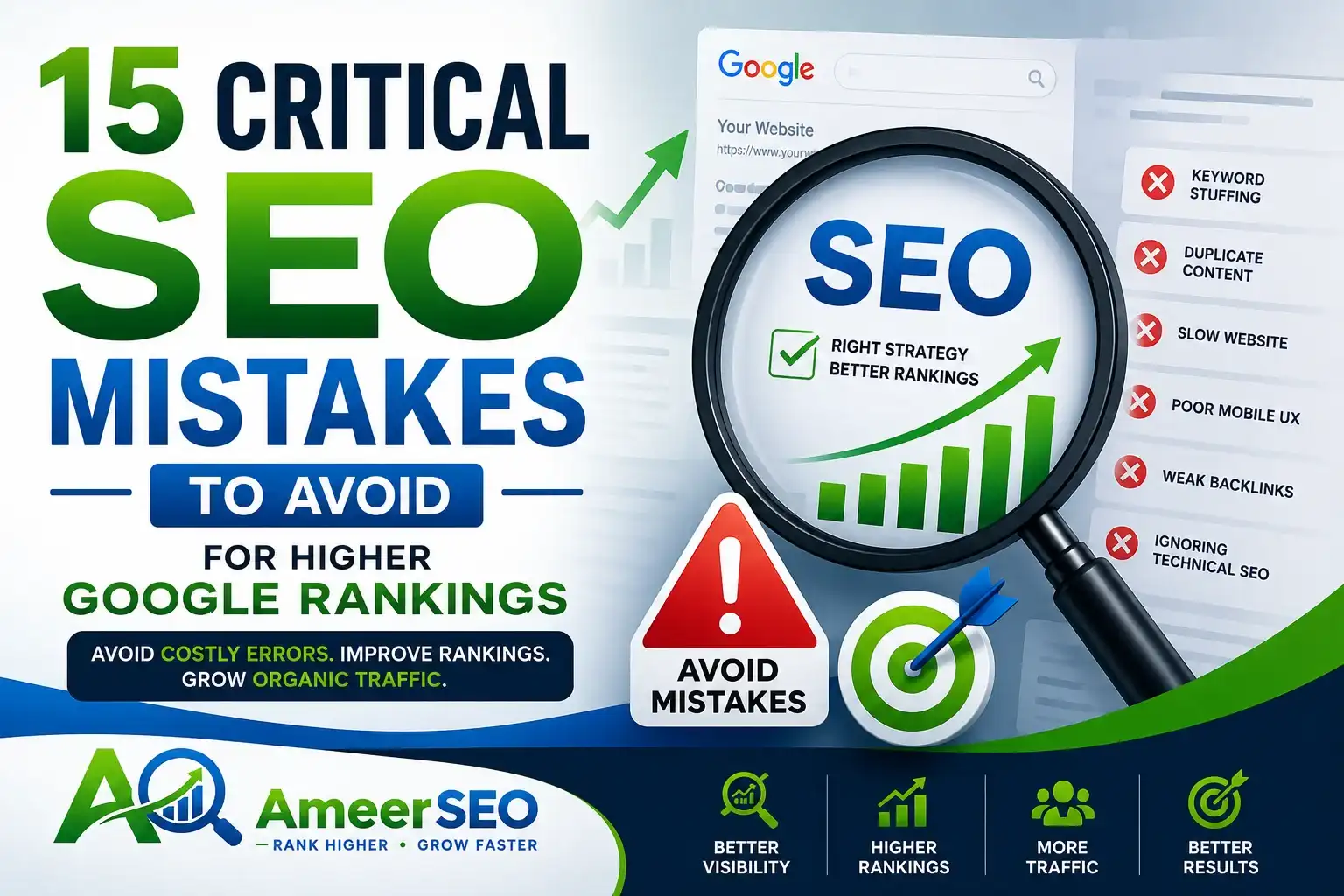
Search engine optimization continues to evolve every year, but one fact remains unchanged: avoiding common SEO mistakes is just as important as implementing the right strategies. Even well-designed websites can struggle to rank if they overlook technical issues, publish low-quality content, or ignore user experience. These mistakes often reduce search visibility, limit organic traffic, and prevent businesses from reaching their full online potential.
Whether you own a small business, manage an eCommerce store, or run a corporate website, understanding the most common SEO mistakes can save time, money, and effort. Businesses looking for a powerful SEO service in Pakistan often discover that poor optimization practices are the biggest reason behind disappointing search performance. Fixing these errors creates a stronger foundation for sustainable growth.
Companies searching for an expert SEO service in Lahore frequently focus on publishing more content without realizing that technical SEO issues may be preventing search engines from properly crawling and indexing their websites. Before producing new content, every website should ensure its existing pages are fully optimized.
Organizations investing in a winning SEO service in Karachi usually expect immediate ranking improvements, but success depends on avoiding costly optimization errors while following Google’s latest guidelines. Search engine optimization is a long-term investment that rewards consistency and quality.
Many businesses seeking a strategic SEO service in Islamabad fail to align their content with search intent, while companies looking for an advanced SEO service in Hyderabad often underestimate the importance of website performance and user experience. Professional agencies like Ameer SEO help businesses identify and resolve these issues through comprehensive SEO audits and proven optimization strategies.
Why Avoiding SEO Mistakes Matters
SEO is more than adding keywords to webpages. Modern search engines evaluate hundreds of ranking signals before deciding where a page appears in search results. A single technical issue may prevent Google from crawling important pages, while poor content quality can reduce trust and authority.
Every optimization effort should improve user experience alongside search visibility. Google’s algorithms increasingly reward websites that provide valuable information, fast loading speeds, mobile-friendly layouts, and trustworthy content. Avoiding mistakes helps improve Google rankings while increasing organic traffic and conversions.
1. Ignoring Search Intent
One of the biggest SEO mistakes is creating content that doesn’t match what users actually want.
Search intent determines whether users are looking for information, comparing products, or making a purchase. If your content doesn’t satisfy their expectations, even excellent keyword optimization won’t deliver strong rankings.
Always analyze the top-ranking pages before creating content. Understanding why those pages rank helps create better content optimization strategies.
2. Keyword Stuffing
Years ago, repeating keywords excessively could improve rankings. Today, keyword stuffing has the opposite effect.
Google understands natural language and semantic relationships between words. Instead of forcing keywords into every sentence, focus on writing naturally while using semantic keywords and related phrases.
Content should read naturally for users first and search engines second.
3. Publishing Thin Content
Thin content offers very little value to readers.
Short pages lacking useful information often struggle to rank because they fail to demonstrate expertise. High-quality content answers user questions thoroughly while maintaining readability.
Adding examples, statistics, explanations, and comparisons significantly improves content quality.
4. Duplicate Content
Duplicate content confuses search engines about which version of a page should rank.
This issue commonly appears when websites copy manufacturer descriptions, reuse blog content, or create multiple URLs containing identical information.
Using canonical tags and creating original content helps eliminate duplicate content issues.
5. Poor Meta Titles and Meta Descriptions
Your title tag and meta description influence both rankings and click-through rates.
Effective metadata should accurately describe page content while encouraging users to click. Every page should have unique titles and descriptions that naturally include target keywords.
Avoid generic titles that fail to communicate value.
6. Weak Internal Linking
Internal linking improves website architecture while helping search engines discover important pages.
Well-planned internal links distribute authority across your website and guide visitors toward related content. They also improve crawlability and indexing.
A logical linking strategy strengthens overall SEO performance.
7. Ignoring Technical SEO
Technical SEO provides the foundation for successful optimization.
Problems involving crawl errors, broken links, XML sitemaps, robots.txt files, canonical tags, or indexing issues can significantly reduce visibility.
Regular technical audits ensure search engines can access and understand your content.
8. Slow Website Speed
Website speed directly impacts user experience and rankings.
Visitors rarely wait for slow pages to load. Google also considers page performance through Core Web Vitals, making page speed optimization an essential ranking factor.
Compressing images, reducing unnecessary scripts, and enabling caching improve loading performance.
9. Poor Mobile Optimization
Most searches now occur on mobile devices.
A website that performs poorly on smartphones will lose visitors and rankings. Responsive design, readable fonts, fast loading pages, and mobile-friendly navigation improve usability.
Google primarily indexes mobile versions of websites.
10. Ignoring Image SEO
Images contribute to both user engagement and search visibility.
Optimized images include descriptive filenames, relevant alt text, compressed file sizes, and appropriate dimensions. These improvements help pages load faster while supporting accessibility.
Image SEO also creates opportunities to rank in Google Images.
11. Low-Quality Backlinks
Backlinks remain an important ranking factor, but quality always outweighs quantity.
Purchasing spammy links or participating in link schemes can trigger penalties. Focus on earning backlinks from reputable, relevant websites through valuable content and genuine outreach.
Trustworthy backlinks increase website authority over time.
12. Ignoring Structured Data
Schema markup helps search engines better understand webpage content.
Structured data can improve search appearance through rich results such as FAQs, reviews, products, and business information.
Although schema isn’t a direct ranking factor, it improves visibility and click-through rates.
13. Skipping Regular SEO Audits
SEO isn’t a one-time project.
Websites constantly change, and search engine algorithms continue evolving. Regular SEO audits identify crawl errors, broken pages, duplicate content, missing metadata, and technical issues before they affect rankings.
Continuous improvement keeps websites competitive.
14. Not Monitoring Performance
Without measurement, improvement becomes difficult.
Google Search Console and Google Analytics provide valuable insights into search visibility, indexing status, user behavior, keyword performance, and organic traffic trends.
Data-driven decisions produce stronger SEO results.
15. Ignoring User Experience
User experience influences both engagement and rankings.
Visitors expect intuitive navigation, readable content, fast loading pages, and easy access to information. Poor usability increases bounce rates while reducing conversions.
Search engines increasingly reward websites that satisfy user expectations.
Good SEO vs Poor SEO Practices
| SEO Element | Good SEO Practice | Poor SEO Practice |
|---|---|---|
| Keywords | Natural keyword optimization | Keyword stuffing |
| Content | Helpful, original, comprehensive | Thin or duplicate content |
| Backlinks | High-quality authoritative links | Spammy purchased links |
| Internal Linking | Logical website architecture | Random or missing links |
| Website Speed | Fast loading pages | Slow performance |
| Mobile SEO | Responsive design | Poor mobile usability |
| Metadata | Unique optimized titles | Duplicate or missing titles |
| Technical SEO | Regular audits | Ignoring crawl issues |
| Images | Compressed with alt text | Large unoptimized images |
| User Experience | Easy navigation | Confusing layouts |
Essential SEO Best Practices
Although every website differs, several optimization practices consistently improve rankings.
Always remember to:
Create original, high-quality content.
Optimize for user intent instead of search engines alone.
Improve Core Web Vitals.
Maintain a mobile-friendly website.
Build authoritative backlinks naturally.
Use schema markup where appropriate.
Fix crawl and indexing issues promptly.
Monitor performance with Google Search Console.
Perform regular SEO audits.
Continuously improve user experience.
How Google Evaluates Website Quality
Google uses hundreds of ranking signals to determine search positions.
Among the most important factors are content relevance, website authority, page experience, technical health, helpful information, internal linking, search intent satisfaction, and user engagement. Websites that consistently provide value while avoiding optimization mistakes generally achieve stronger long-term rankings.
Building an Effective Long-Term SEO Strategy
Successful SEO requires patience and continuous optimization.
Instead of chasing algorithm loopholes or shortcuts, businesses should focus on producing valuable content, maintaining technical excellence, earning trustworthy backlinks, and improving website usability. Sustainable strategies continue delivering organic traffic for years.
Every optimization effort should support both search engines and human visitors.
Conclusion
Avoiding SEO mistakes is often more valuable than chasing the latest ranking hacks. A technically sound website, combined with high-quality content, strong user experience, and ethical optimization practices, creates lasting search visibility.
Whether your goal is improving Google rankings, increasing organic traffic, or generating more qualified leads, success comes from consistent improvement rather than shortcuts. By identifying and correcting these common SEO errors, your website will be better positioned to compete in today’s highly competitive search landscape.
Frequently Asked Questions
What are the most common SEO mistakes?
The most common SEO mistakes include keyword stuffing, duplicate content, slow website speed, poor mobile optimization, weak internal linking, ignoring technical SEO, and publishing low-quality content.
Does keyword stuffing still work?
No. Google can recognize unnatural keyword usage and may reduce rankings for pages that overuse keywords.
Why is technical SEO important?
Technical SEO ensures search engines can crawl, index, and understand your website correctly. Without a solid technical foundation, even excellent content may struggle to rank.
How often should I perform an SEO audit?
A comprehensive SEO audit should be performed at least every three to six months. Larger websites may benefit from monthly technical reviews.
Can duplicate content hurt rankings?
Yes. Duplicate content can confuse search engines, reduce indexing efficiency, and split ranking signals between multiple pages.
Do Core Web Vitals affect SEO?
Yes. Core Web Vitals are part of Google’s page experience signals and contribute to overall website performance and user satisfaction.
How can I improve Google rankings naturally?
Focus on creating valuable content, improving website speed, optimizing technical SEO, earning high-quality backlinks, enhancing user experience, and regularly updating your content.
Are backlinks still important in SEO?
Yes. High-quality backlinks remain one of Google’s strongest ranking signals because they indicate authority, trust, and relevance.
Why is search intent important?
Matching search intent helps users find exactly what they need, improving engagement and increasing the likelihood of higher rankings.
What is the best way to avoid SEO mistakes?
Regularly audit your website, follow Google’s guidelines, monitor performance through Google Search Console and Google Analytics, and continuously optimize both technical and content-related elements.